Locks aggregate in place
The cellular structure confines compacted stone so hoof traffic is less likely to push footing out of the problem area.

Tell us where mud is causing trouble on your property and we'll help you map out a practical LightHoof solution for your gate, paddock, waterer, shelter, dry lot, or other high-traffic area.
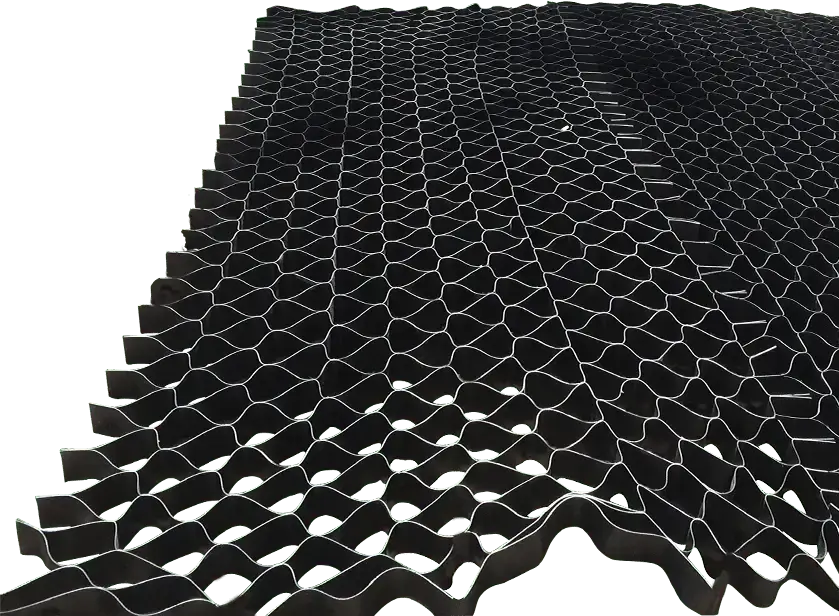
Loose footing can shift, spread, and sink into soft soil. LightHoof's flexible cell structure holds compacted aggregate in place so the surface can stay more stable under repeated use.
High hoof traffic pushes unconstrained material sideways or into soft soil.
Repeated top-ups can mean paying again for material, equipment, labor, and cleanup.
LightHoof confines compacted aggregate inside connected cells to help distribute weight and resist displacement.
Designed specifically for demanding horse environments rather than forcing a generic landscaping solution into an equine setting.
The cellular structure confines compacted stone so hoof traffic is less likely to push footing out of the problem area.
Panels conform to the site and create a connected stabilized layer instead of isolated rigid tiles.
Many projects can be completed with common landscaping tools, locally sourced aggregate, and a plate compactor.
Target gates, waterers, shelters, and concentrated trouble spots before rebuilding large areas.
Stabilized footing can help maintain a more dependable surface through challenging weather.
LightHoof panels are made in the USA and backed by a 10-year manufacturer's limited warranty.
The best first project is usually the area that stays muddy longest or takes the heaviest daily traffic.
Stabilize narrow traffic funnels where every horse crosses the same ground.
Improve high-use areas where splashing and repeated standing destroy bare footing.
Create more dependable footing inside and around shelter entrances.
Stabilize concentrated-use areas where horses spend extended time off pasture.
Reduce recurring churn where horses gather multiple times every day.
Build a cleaner transition between paddocks, aisles, shelters, and working areas.
Reinforce high-traffic travel lines between the places horses naturally use.
Help keep aggregate from migrating downhill where erosion and traffic combine.
Your exact project depends on the site, but the core installation follows a straightforward sequence.
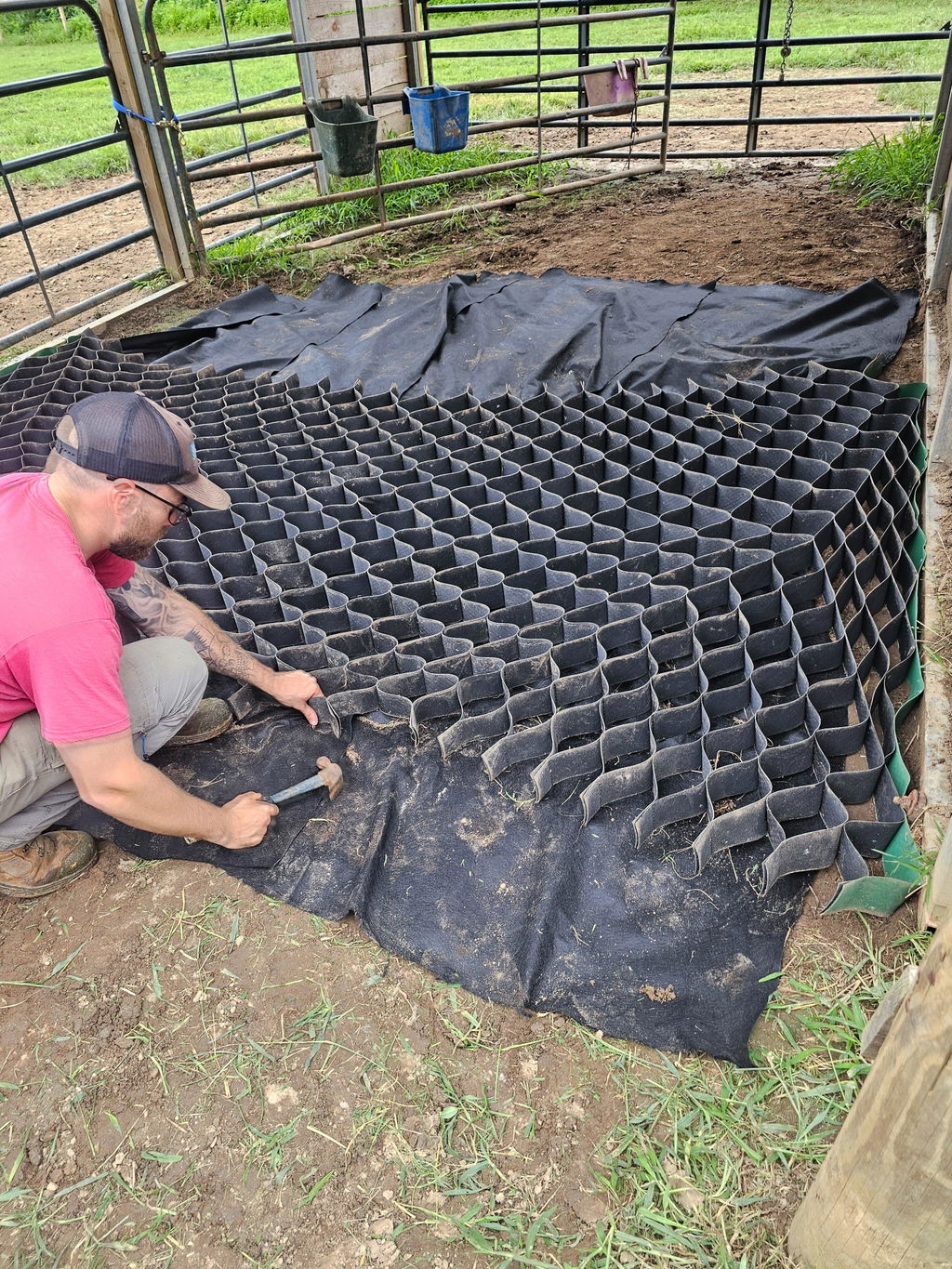
Remove major debris and make any desired grading changes before installing the system.
A heavy-duty nonwoven fabric helps separate stabilized aggregate from the soil underneath.
Each panel expands to approximately 6 × 12 feet and connects to neighboring panels.
Fill the cells using suitable angular crushed stone with fines.
Compact the aggregate thoroughly and add the desired final surface layer.
A system installed in barns, paddocks, shelters, and high-traffic areas year after year.
After heavy rain, customers describe the stabilized surface as holding firm where mud used to take over.
Give us a few details about your property and problem area. Your answers help the LightHoof team understand the scope before recommending a practical starting point.
Many customers complete installation themselves using common landscaping tools. Larger areas may be easier with equipment for moving aggregate.
Installation can be done over existing mud where aggregate can reach the site. Any desired grading changes should be completed before installation.
Use suitable compactable angular crushed stone with fines. Quarry terminology varies by location.
Start with the area that stays muddy longest or receives the heaviest daily traffic.
It is a rough estimate based on approximately 72 square feet of expanded coverage per panel. Actual site layouts may change the quantity required.
Start with your worst area. Send the dimensions and project details, then use your personalized guidance to plan the next move.